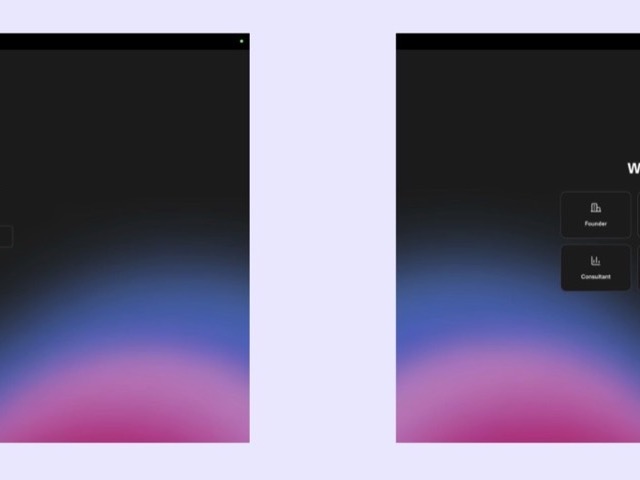
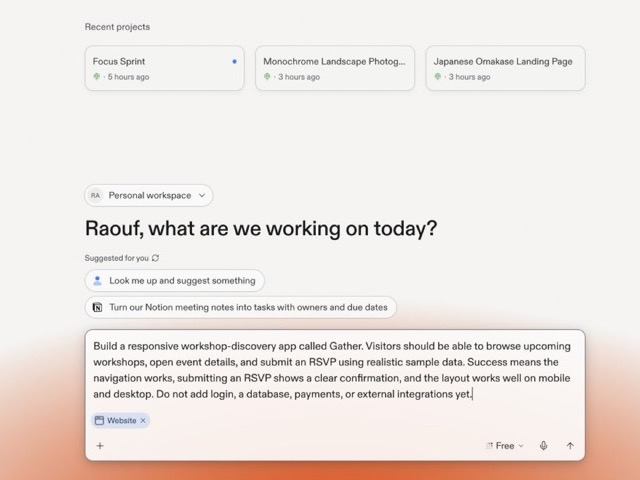
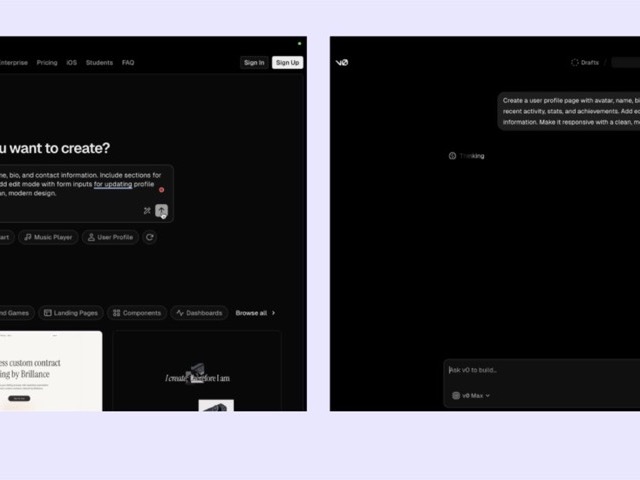
Into the first generation. The home screen is a prompt box, and activation happens when the first output lands.
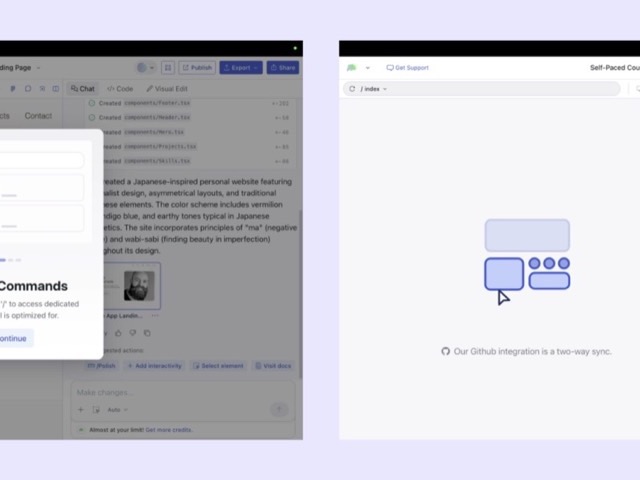
Lovable's head of growth says she barely worked on activation at first, because it happens inside the conversation with the agent. The goal is a "wow moment": the first preview after the first prompt. The growth team now writes agent instructions to help users activate. Lovable
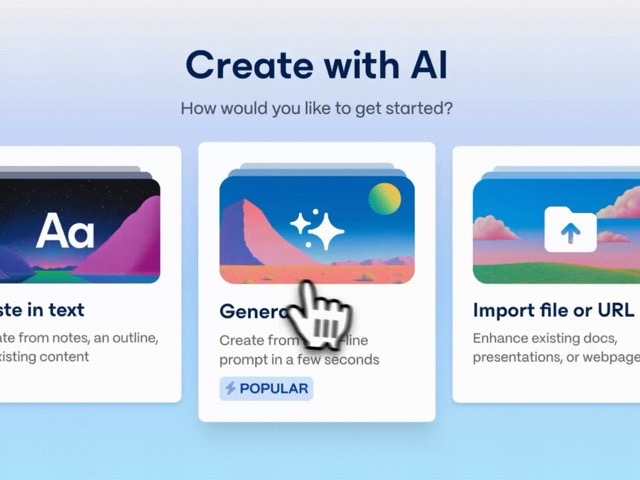
Gamma spent three to four months after launch rebuilding onboarding "so that AI was part of the actual onboarding." Signups went from a few hundred a day to 20,000. Gamma
Replit treated first-build speed as the onboarding metric and cut it from 15–20 minutes to 3–5. Replit
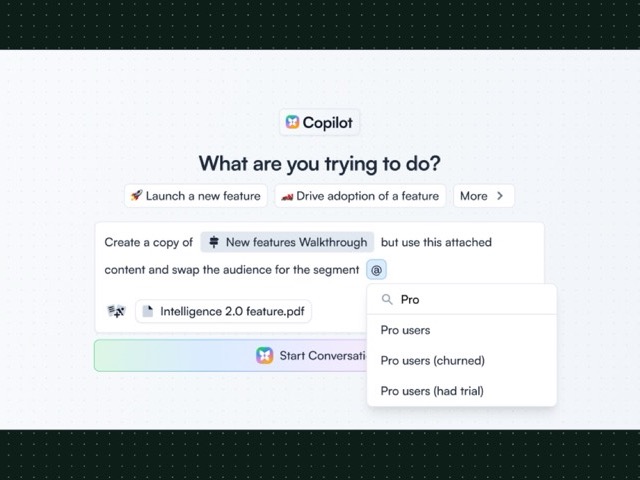
The home screens look alike: one big prompt box greeting you by name (Replit, Lovable), "What do you want to create?" (v0), or "What can I do for you?" (Manus).
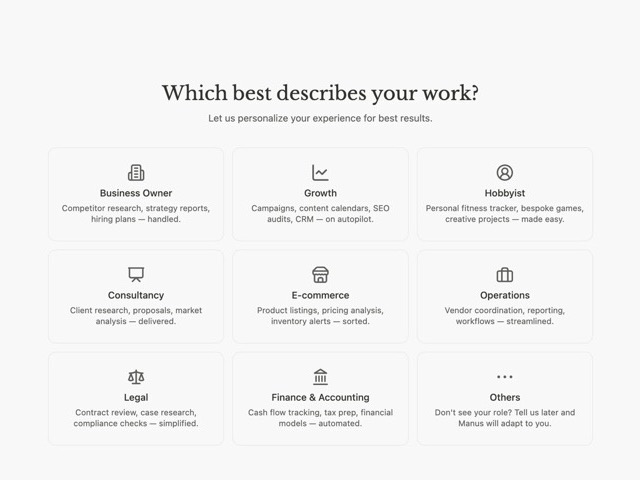
Five moves recur: starter chips, the AI speaking first, starters built from a short quiz, a feed of other people's work, and a search-style box.
The problem is named from inside the companies. OpenAI's Logan Kilpatrick says newcomers face "this blank slate". Cognition's Scott Wu says early Devin users "see the blank screen and not really know" what to do Devin. Perplexity's head of design calls prompting "the worst software experience ever".
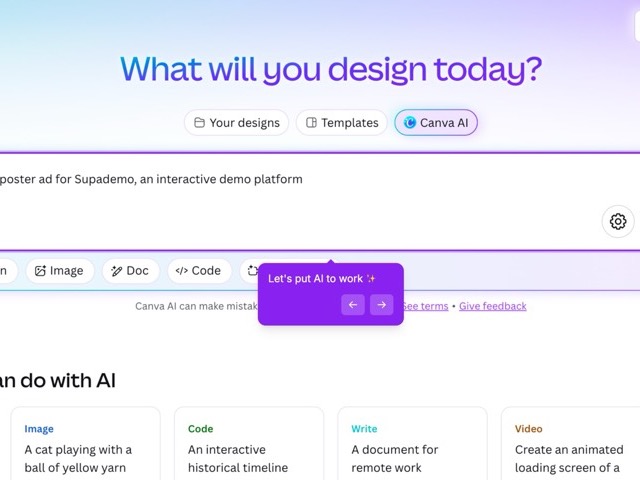
Starter chips under the box: Canva, v0, Perplexity, Replit, and Notion AI, which groups them by job (write, edit, summarize) Notion AI. Manus goes further: each example opens a replay of a finished task Manus.
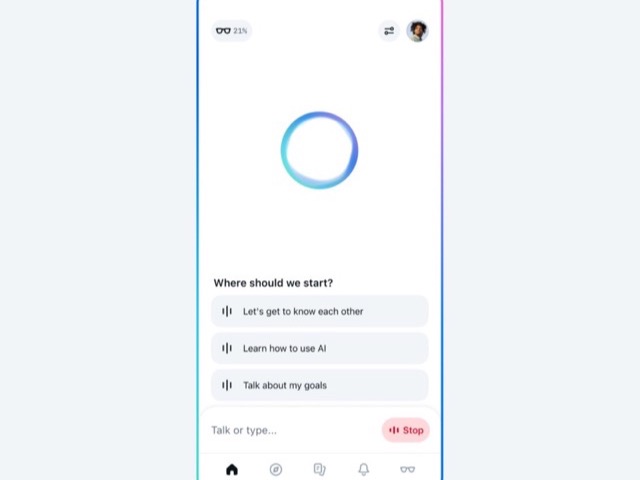
The AI speaks first. Pi opens with "How's your day going?". Meta AI offers three spoken starters Meta AI. Replika greets you by name.
Starters built from a short quiz. Claude asks for your name and three topics, then offers three ideas. Picking one sends a long, well-written prompt for you, which teaches prompting by example.
A feed of other people's work: Midjourney's Explore Midjourney, Character.ai's For You and Meta AI's Discover Meta AI.
Perplexity makes the box behave like search, with autocomplete, so you can type "how you would use Google".
Only questions whose answers visibly change what comes next. Everything else can wait or be inferred.
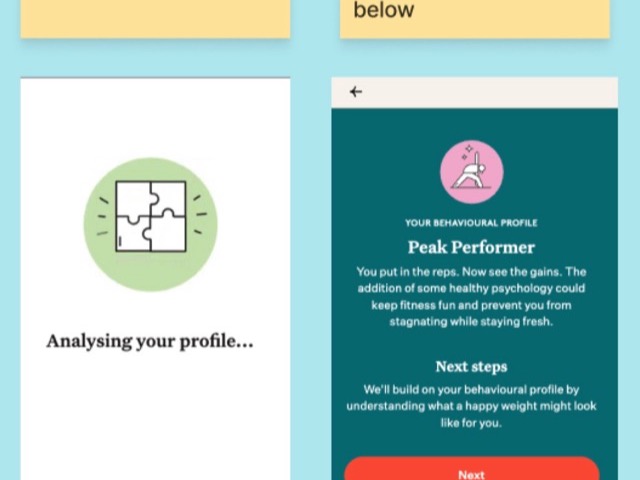
The spread is wide. Gemini's onboarding is 2 screens Google Gemini, Character.ai's is 3 Character.AI, and Copilot lets you chat as a guest. Replika runs about 20 steps before its paywall. Noom runs up to 113 screens, but keeps redrawing a predicted goal date so each answer feels useful Noom.
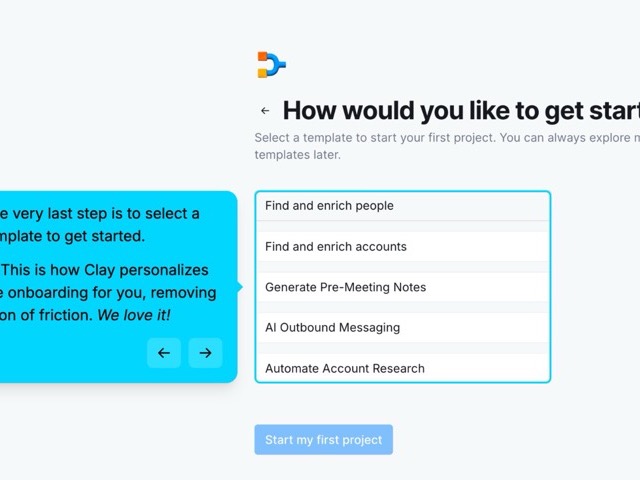
The questions that pay off change the next screen. Claude's three topics become three starters. Canva's single use-case question tailors templates Canva. Clay's "How would you like to get started?" routes you into a live workbook Clay.
Lovable asks name and role after signup. One teardown noted the reviewer expected to see work starting on their prompt during those screens, and it wasn't Lovable.
Microsoft Design's research on a Copilot agent argues for showing value first and personalizing later through "learned preferences, inferred context, and smart defaults, not lengthy onboarding conversations".
Yes, and it is the most distinctive AI-era pattern here: start from a URL, a calendar, an old app or an existing profile.
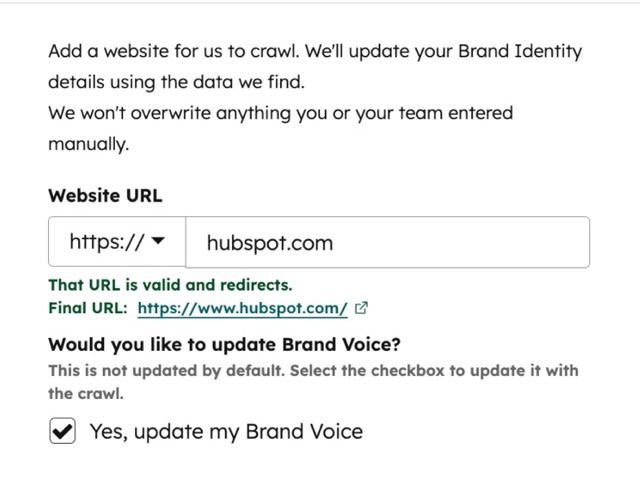
From a website URL: HubSpot Breeze crawls your site and fills industry, competitors, content themes and tech stack HubSpot. Clay's Sculptor suggests prospect searches from your company's site before you type anything Clay.
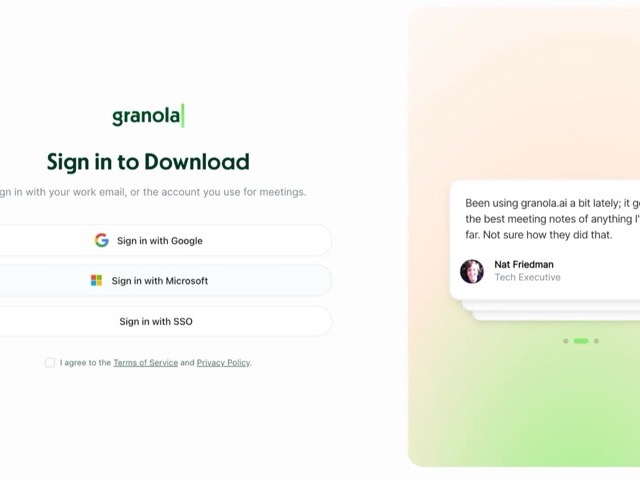
From a calendar: Granola's upcoming meetings are "already there" after login Granola. Otter suggests meetings to auto-join Otter.ai.
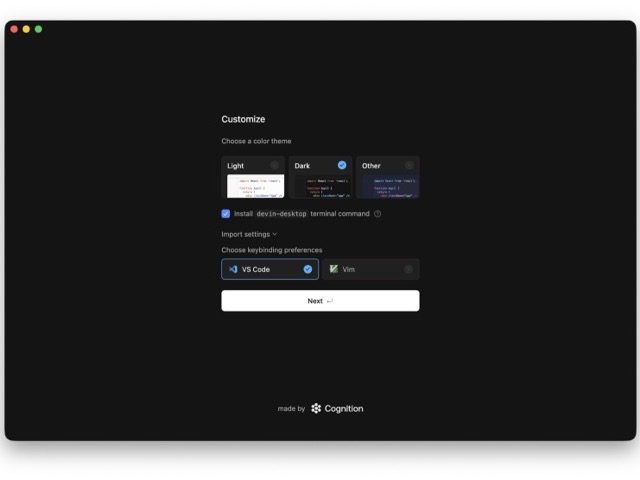
From the app you are leaving: Windsurf imports VS Code and Cursor settings by name Windsurf. Dia imports your browser data and your ChatGPT memories Dia.
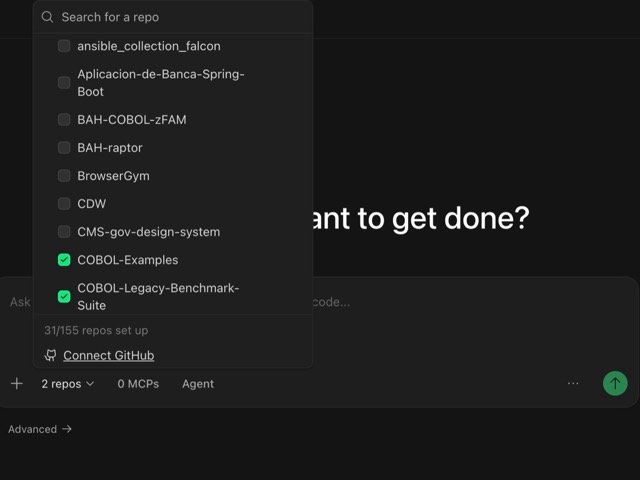
From an existing identity: Meta AI personalizes from linked Facebook and Instagram accounts Meta AI. GitHub Copilot enrolls you in a free tier just by signing in with GitHub GitHub Copilot.
From one sentence about the business: Shopify generates several full stores to choose from Shopify, and Webflow generates a multi-page draft Webflow.
The safeguard that matters: HubSpot promises "We won't overwrite anything you or your team entered manually" and asks you to review the generated brand voice HubSpot.
The products that let people try before signing up describe it as a deliberate choice. The hard gates mostly come from fraud, age or infrastructure constraints.
Value first: Perplexity's logged-out home is a working search box, and signup is pitched as "unlock the full potential". v0 starts generating before you sign up; a teardown found 4 of 6 AI builders asked for signup up front, and v0 didn't v0. Copilot lets guests chat and ties sign-in to "longer conversations".
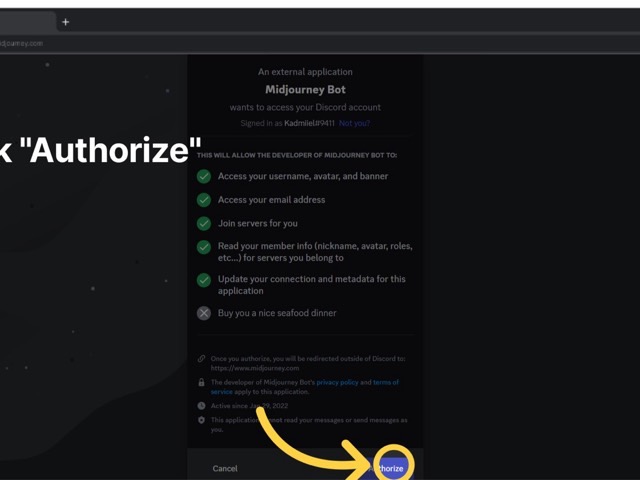
Gate first: ChatGPT's 2023 iOS flow required name, birthday, phone verification and a puzzle before the first message. Midjourney's Discord era took 13 screens and two captchas Midjourney. Claude Code assumes you already have a paid account Claude Code. Granola blocks free email providers Granola.
A middle path: borrow an account people already have. GitHub sign-in enrolls you in Copilot Free GitHub Copilot. Meta AI uses Facebook or Instagram Meta AI.
Earlier than in classic SaaS, often before the first message, because every output costs money. The better flows teach the meter along with the price.
Mid-onboarding plan pickers: Claude shows Free, Pro and Max before the first chat, labeled "Stay on Free plan". Perplexity shows plans right after signup. Manus Manus and Grammarly offer 7-day trials inside setup. Replika puts a paywall after a long quiz.
After value: Gemini's upgrade comes later in use. Character.ai has a soft paywall after onboarding. Pi has none.
Credits as onboarding. Lovable starts at 5 daily credits Lovable. Manus shows a balance that refills at midnight Manus. Magic Patterns warns "Almost at your limit" during the first session Magic Patterns. Clay pays out 100 credits for your first enrichment, which works as a reward because every action costs credits Clay.
The Manus teardown puts it plainly: "If usage is metered, teach the meter during onboarding." Manus
A draft you can steer. The creative and site builders all add a checkpoint before the expensive generation.
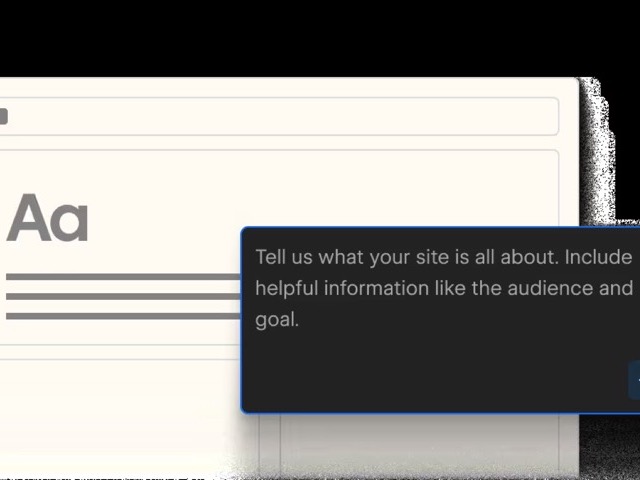
Gamma's main button says "Generate outline", not "Generate deck" Gamma. Figma renamed Make Designs to First Draft so the output would read as a starting point Figma. Framer's Wireframer generates "structure, not style" Framer. Webflow walks you through structure, then theme, then polish Webflow.
Choice instead of one answer: Shopify generates several stores to pick from Shopify. Replit added a flow to "visualize what Agent would build before committing" Replit. Lovable has a Plan mode that writes a plan without changing code Lovable.
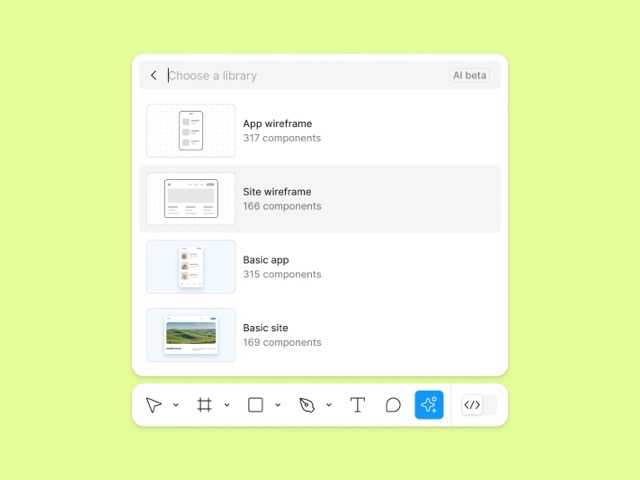
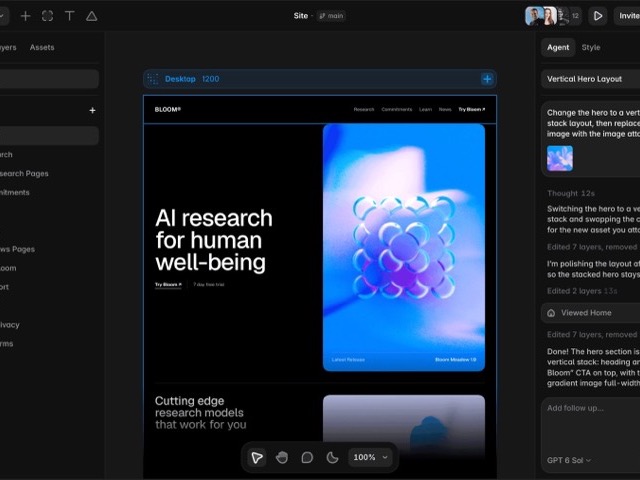
The output is real, editable material: Figma uses real library components Figma, Framer produces real layers Framer and Webflow a design system Webflow. A picture of a design would dead-end.
Tours that describe features are fading. Tours that make you do the thing still work, and tips have moved into the time spent waiting on generation.
Chameleon's benchmarks: 5-step tours see 78% drop-off, and 91% of users dismiss the first onboarding step Chameleon.
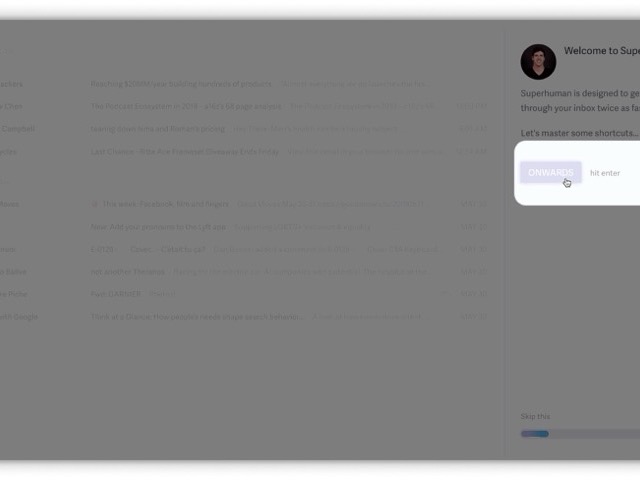
But Superhuman's interactive panels went from 30% to 98% completion. Its practice inbox won't advance until you press the real key Superhuman. Its growth lead's rule is do > show > tell.
Teaching moves to the wait: Magic Patterns shows a feature modal and rotating tips while the first output renders Magic Patterns.
Teaching moves to the moment of use: ChatGPT's voice intro appears the first time you open voice. NN/g praises Perplexity's hover tooltips over upfront tutorials. Notion AI lives in the page you are already editing Notion AI.
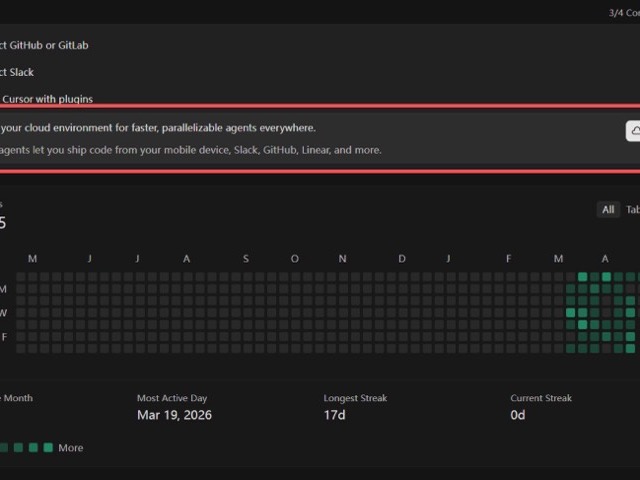
Checklists persist, and they break when completion detection misses. Cursor's forums show users stuck at 3/4 after finishing a step Cursor.
By example more than by instruction: seeded prompts, replays and small first tasks.
Claude's starter ideas send a long prompt that tells the model to ask follow-up questions and use tools, so the first message is a model prompt.
Replit's first-app guide teaches one outcome plus success criteria, and postpones login, data and payments Replit. Vercel teaches a three-part prompt (product surface, context of use, constraints and taste), which in its test came out 19 seconds faster with 152 fewer lines v0.
Start small. Devin's onboarding pushes repo setup and "a couple one pointer tasks" first: "treat Devin like your new junior engineer" Devin. Claude Code's docs suggest questions like "what does this project do?" before any edit Claude Code.
Package the prompt so there is nothing to learn: Gemini's Gems Google Gemini, ChatGPT's GPTs ChatGPT, and Dia's preloaded Skills Dia.
Up front and briefly: one screen of cautions, an "AI can make mistakes" line near the input, and approval before the AI changes anything.
ChatGPT's welcome screen went from three cautions to two: accuracy, and sensitive info used for training. Claude opens with "Data, safety, and you". Dia puts "Built for your trust" first of its five things to know Dia.
Microsoft Design treats the Copilot zero state as education, because the first encounter with an LLM is "potentially intimidating". It shows capabilities, limits and a "Check for mistakes" notice from the first visit.
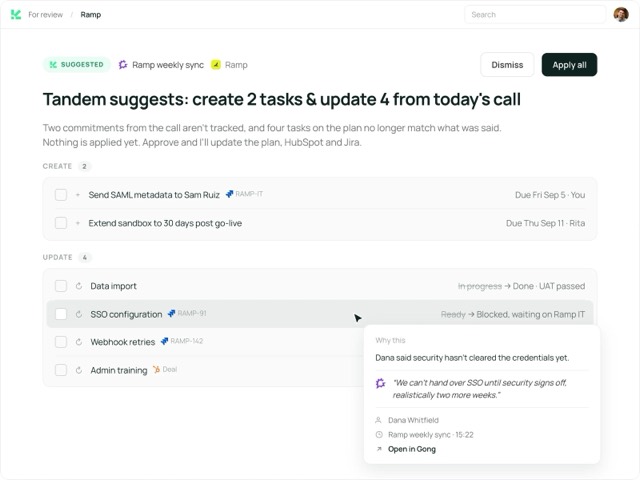
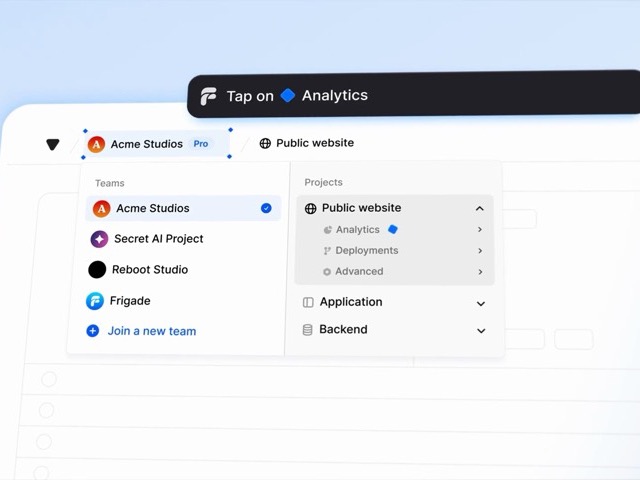
When AI acts on your data, it asks first. Tandem shows "Nothing is applied yet" with a quote from the call explaining each change Tandem. Frigade fills in the invite but leaves the final click to the user Frigade. Userflow's action flows run only after a click Userflow.
Age gates are standard for companion apps: Character.ai asks for a birthday Character.AI, and Replika asks for an age range.
Teams that name it define a single concrete first success, and several say they got results by pushing one thing hard.
Named activation moments: Lovable's first preview Lovable, Clay's first enrichment run on a live table Clay, Devin's repo set up plus a first small task Devin, and Gamma's "magic in the first 30 seconds" Gamma.
One thing, not five. Gamma's "one egg" rule: show a new user one idea, not four or five features, and treat them as "selfish, vain, and lazy" Gamma. Superhuman's self-serve activation rose from 40% to 50% after onboarding pushed one opinionated feature Superhuman.
Humans set the bar. Superhuman's 1:1 onboarding calls led 65% of customers to fully switch, more than double the self-serve rate, and the practice inbox was built to close that gap Superhuman.
Figma has a team called "Blockers" whose fixes showed up as activation gains Figma.
They all ship "describe the goal and we'll draft the flow." The frontier is an agent that does the setup for the user, which would make the tour unnecessary.
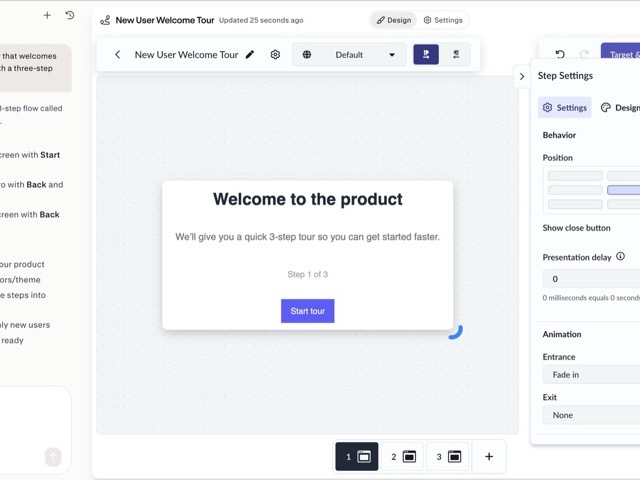
Prompt-to-flow builders: Appcues builds from a request, a mockup or a URL Appcues. Pendo's editor opens with "Start with a prompt" Pendo. Userflow records one click-through of your app Userflow. Whatfix turns plain-language targeting rules into config Whatfix.
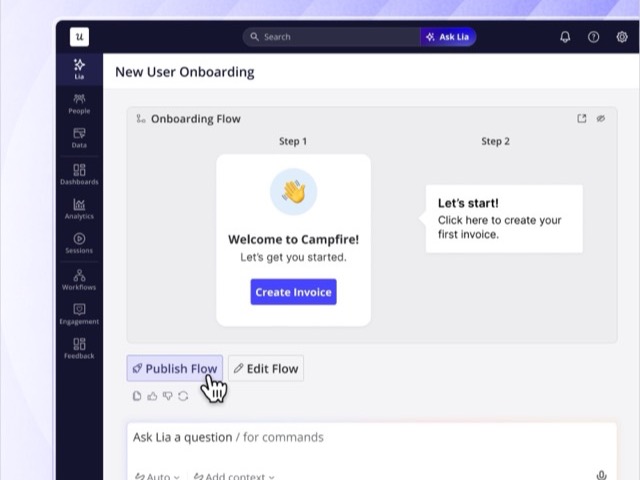
Analytics to fix: Userpilot's Lia answers "Analyze my activation" with a funnel, a recommendation and a Create Onboarding Flow button Userpilot. Chameleon's Copilot pushes back on tours its benchmarks say users dismiss Chameleon.
Agents that act: Frigade's assistant learns your product by using it and can do the setup task Frigade. Userflow's Adoption Agent answers with a matching walkthrough Userflow. Intercom is adding an onboarding role to Fin Intercom.
One vendor already left: Tandem pivoted from an in-app copilot to a workspace for implementation teams Tandem.
They open on voice, with one voice shown at a time and a short description of its tone.
ChatGPT's advanced voice has its own intro sheet, then a carousel ("Ember, confident and optimistic"). Gemini Live shows one voice at a time with a tone line. Pi offers eight voices inside the conversation.
Meta AI's home is an animated orb and three spoken starters, with typing as the fallback Meta AI.
Mostly what worked. Results numbers are rare, and the screens show what a product does, not how well it converts.
Only a handful of teams report outcomes: Gamma, Replit, Superhuman, Chameleon's benchmarks and Vercel's prompt test. Everything else shows what a product does, not whether it works.
Some captures are dated: Duolingo's are from 2019 Duolingo. Dia's images are illustrations from its help page, not real screens Dia.
Noom is included as a reference pattern; none of its sources call its personalization AI Noom.
Missing entirely: Grok and Poe had no public onboarding screenshots. Creative tools like Runway, ElevenLabs and Suno haven't been researched yet.