Duolingo
Duolingo's onboarding asks for a daily goal, then lets learners who already know some of the language take an adaptive placement test. The test uses real exercises chosen one at a time by a model to decide where in the course they start.
Notes
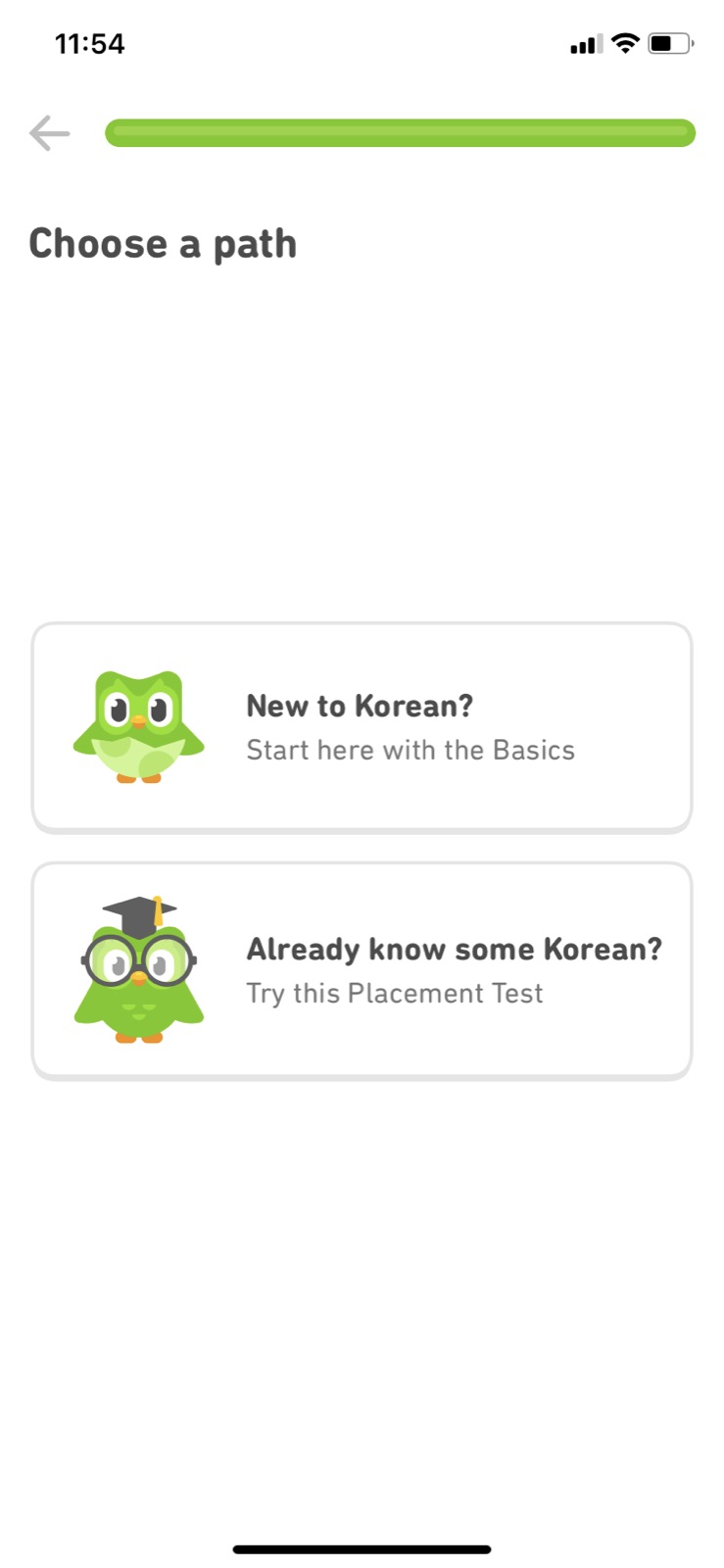
- Onboarding splits early: 'New to Korean? Start here with the Basics' or 'Already know some Korean? Try this Placement Test' (GoodUX teardown screenshots).
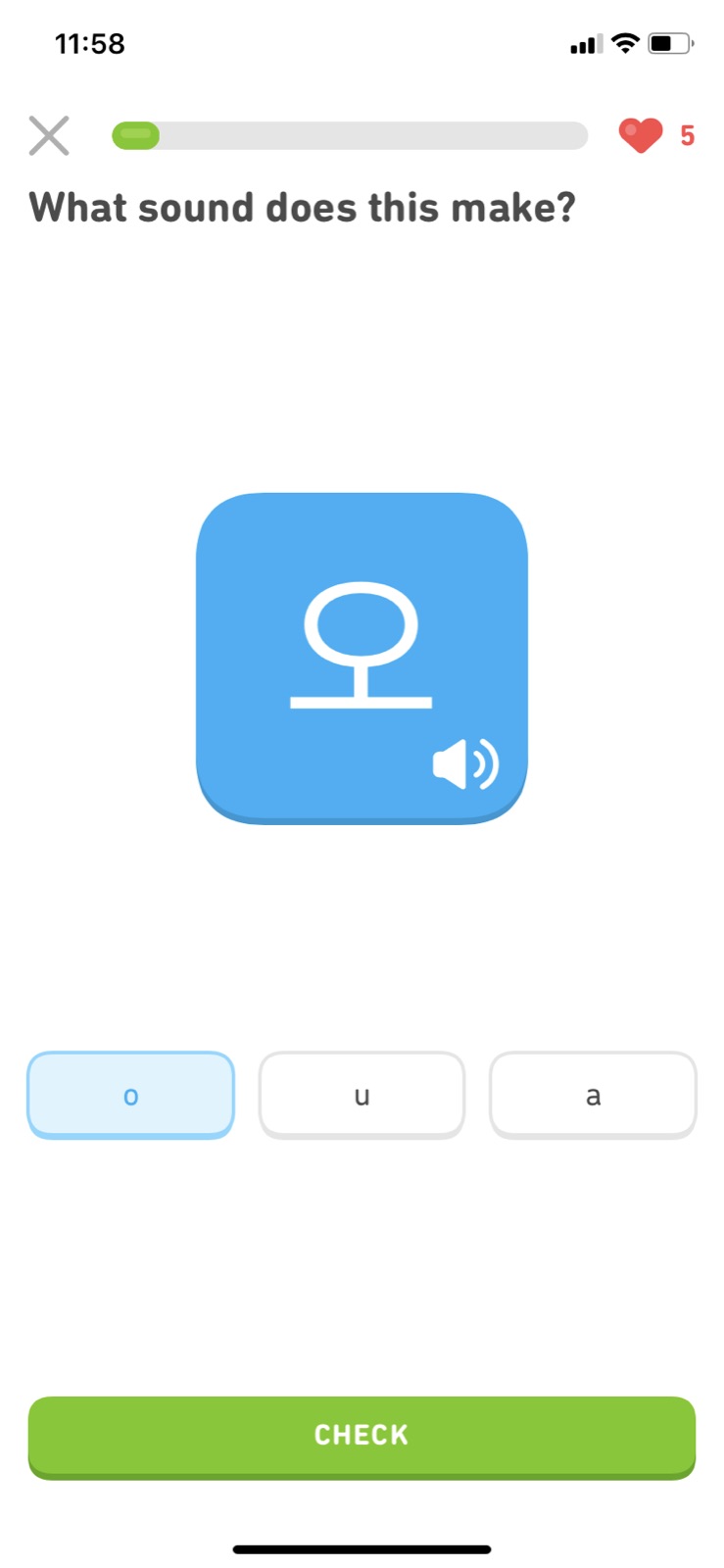
- The placement test uses normal lesson exercises (e.g. 'What sound does this make?') with hearts and a progress bar, so it doesn't feel like a separate exam.
- Research Director Burr Settles: 'The difficulty of the words, the grammar, and the way we present it to you in the test, all play a role to pick the exact configuration so that in less than five minutes we have a really good sense of where you're going to start the course' (AWS customer story).
- The same modelling keeps personalizing after onboarding: spaced repetition that predicts recall per word and adds practice at the right time (AWS); Duolingo's blog says AI lets it 'curate and recommend resources for learners that are at a really specific difficulty level.'
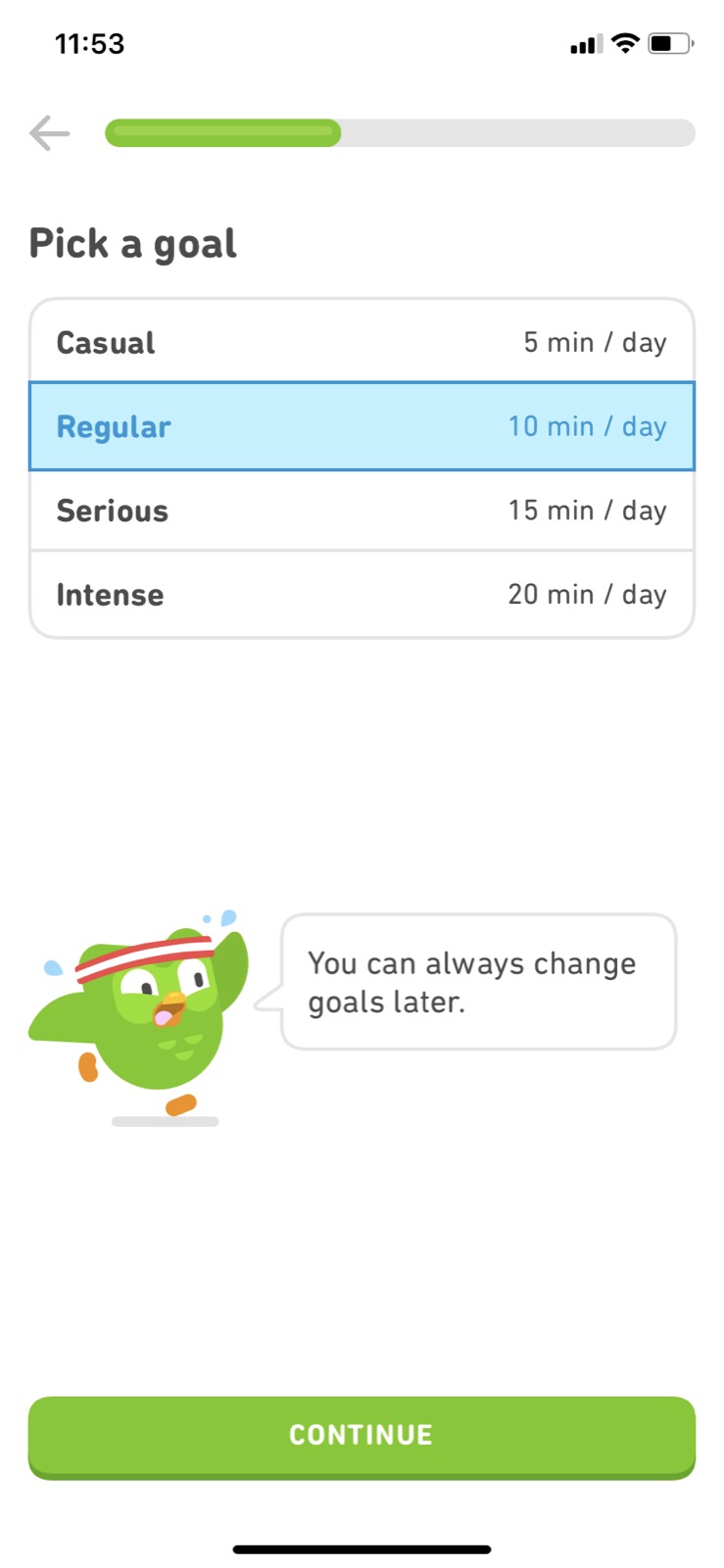
- The goal picker (Casual 5 min to Intense 20 min/day) comes with the mascot reassuring 'You can always change goals later.'
Patterns
adaptive placementpersona/goal quizskip-ahead for experienced users
Articles
- How AI is helping Duolingo democratize educationDuolingo Blogby the team
- Duolingo (AWS machine learning customer story)AWS
- Duolingo's delightful user onboarding experienceGoodUX by Appcues